
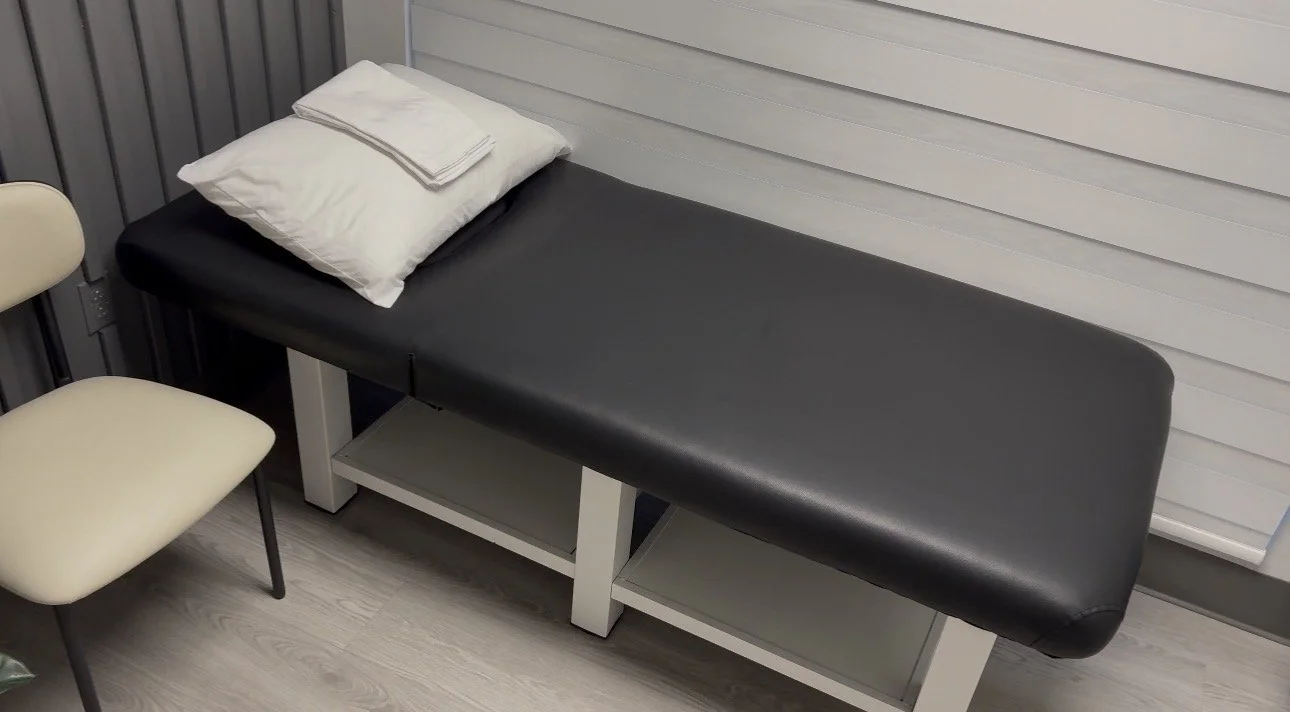
A Treatment Plan Built Around You.
Pelvic floor symptoms do not all have the same cause, and treatment should not follow the same routine for everyone.
Some people need help building strength. Others need to improve relaxation, coordination, movement, or daily habits. Your evaluation helps us understand which approaches may fit your needs.
Together, we will discuss:
What you are experiencing and how it affects your life.
Your relevant medical history and previous treatment.
Assessment options and what you feel comfortable with.
Your priorities for recovery.
A practical plan for treatment and care at home.
Our goal is to help you understand your body and take an active role in your care.
Explore Our Pelvic Floor Treatment Techniques
-
Hands-on care for muscles and surrounding soft tissues.
Soft tissue mobilization uses skilled hands-on techniques to address areas of muscle tenderness, tension, or restricted movement. Depending on your assessment, treatment may focus on the pelvic region or related areas such as the abdomen, hips, and lower back.
We tailor the location and pressure to your needs, explain the purpose of treatment, and check in with your comfort throughout.
-
A focused approach to muscles and connective tissue.
Myofascial release is a form of hands-on treatment directed at muscles and surrounding connective tissue, called fascia. It may be included when your assessment identifies tenderness, sensitivity, or movement restrictions relevant to your symptoms.
-
Specialized hands-on care involving the abdominal region.
Visceral mobilization uses gentle manual techniques around the abdominal organs and surrounding connective tissues. If considered, we will explain why it may be relevant to your presentation, discuss its limitations, and review alternatives.
It does not replace medical evaluation or treatment for an underlying organ condition.
-
An option for care, not a requirement.
When appropriate, an internal vaginal or rectal assessment may provide information about pelvic floor muscle function. Internal treatment may then be discussed as one option within your rehabilitation plan.
We explain what the technique involves and ask for your consent before proceeding. You can ask questions, decline, pause, or stop at any time.
If you prefer not to have internal assessment or treatment, we will discuss external options and what we can assess or address without it.
-
Learning how to strengthen, relax, and coordinate your pelvic muscles.
Pelvic floor rehabilitation is not always about doing more Kegels. Your muscles may need help contracting effectively, releasing fully, or working together during daily activities.
Treatment may include guided practice, breathing coordination, relaxation strategies, and exercises selected for your symptoms and goals.
-
A personalized program that connects treatment to your everyday life.
Your exercise plan may address pelvic floor function alongside hip strength, trunk control, mobility, breathing, and movement habits.
We select exercises based on your assessment and adjust them as you progress. You will receive guidance on how to practice at home and how those activities connect to your goals.
-
Real-time feedback to help you understand how your pelvic floor works.
Biofeedback and muscle-awareness technologies provide visual or audible feedback to help you recognize pelvic floor muscle activity. Depending on your needs, guided practice may focus on contracting, relaxing, or improving coordination.
We explain the recommended technology and sensor placement, obtain your consent, and connect what you learn to your home program.
-
Targeted training for selected bowel concerns.
Rectal balloon catheter training uses a small balloon placed in the rectum to provide feedback during guided practice. Depending on your needs, training may focus on recognizing rectal sensation or improving the coordination involved in bowel emptying.
This is a specialized technique, not a routine part of every pelvic floor appointment. We discuss whether it may be appropriate, explain the process, and obtain your consent before proceeding.
-
Personalized guidance for comfortable, confident use at home.
Dilators and pelvic wands are tools that may complement treatment for selected pelvic pain and penetration-related concerns. When appropriate, we explain their different purposes and guide you through positioning, technique, and a gradual approach tailored to your needs.
Your comfort and consent guide instruction, and we discuss alternatives if they are not right for you.
-
Targeted treatment as part of a personalized approach to persistent pain.
Utilizing the principles of integrative dry needling, this technique uses thin, solid needles to address selected muscles and may be incorporated into your care when muscle tenderness or guarding contributes to your symptoms.
For chronic pain concerns, dry needling is considered alongside exercise, movement retraining, and education, not as a stand-alone solution. We explain its purpose, potential risks, and alternatives before beginning.
Target tools, tailored to you
Biofeedback
Manual Therapy
Dilator Education
Dry Needling